
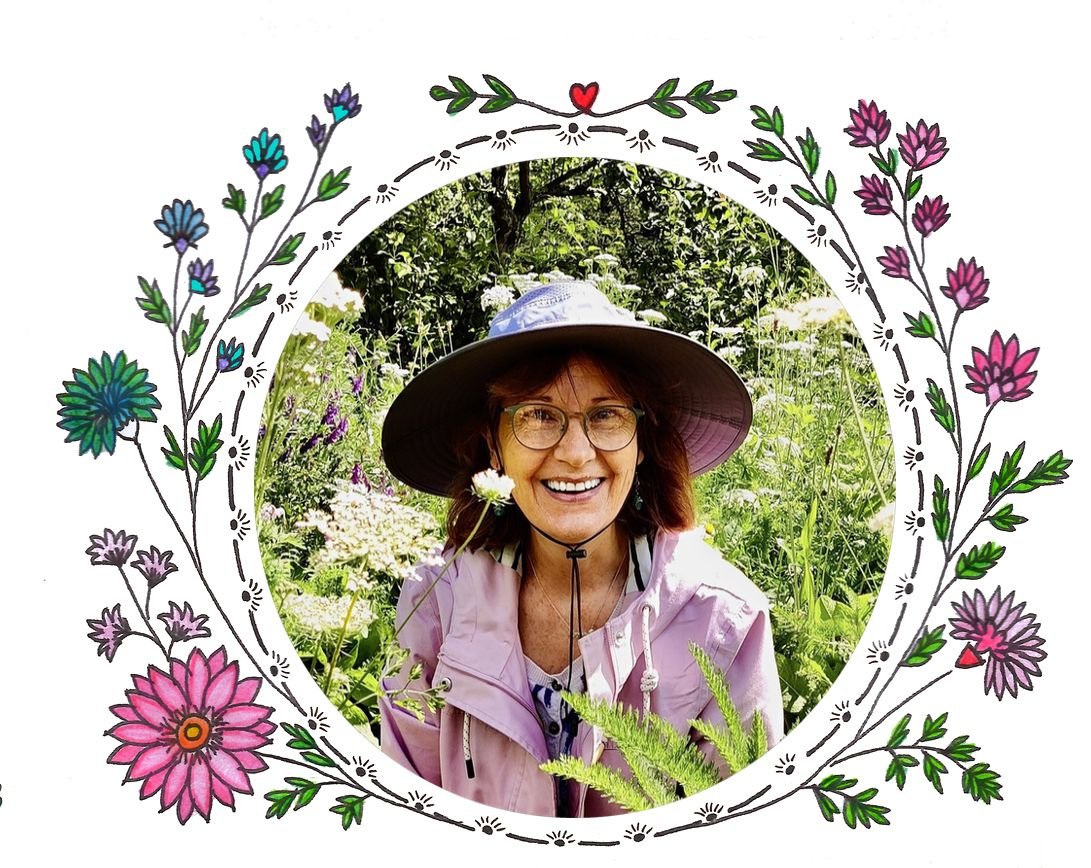

Nicky was born in Farnborough Hospital, Kent on 8 March 1962.
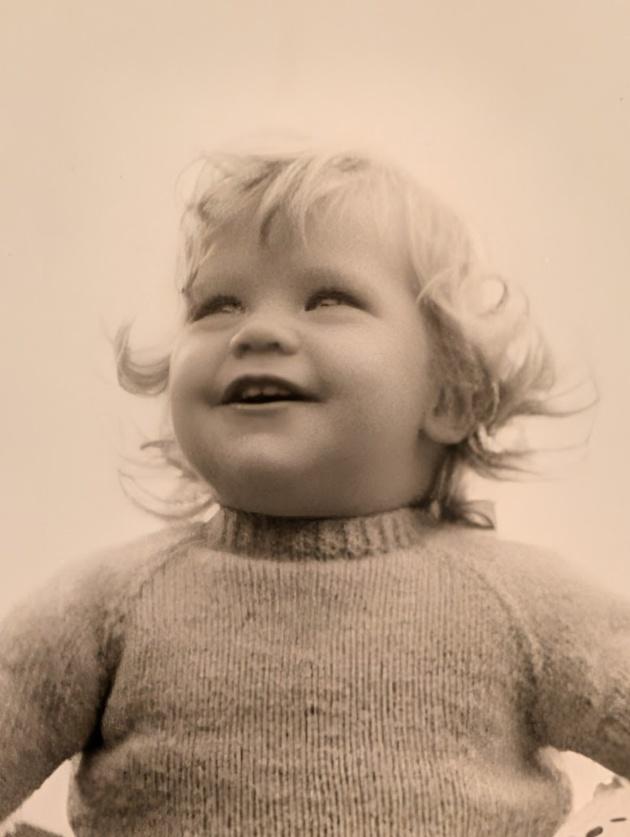
Her father, Duncan Townson, was a Yorkshire youth cricketer and Sidney Sussex graduate who became a history teacher at Sevenoaks School, then later housemaster of Park Grange and senior history master at the school. He had frequent and spirited arguments with a close colleague and friend about the existence of God.
Her mother, Lesley Anne (née Ratcliffe), was a South African-trained nurse with progressive and liberal attitudes fitting for the 1960s. However, Nicky did grow up in Park Grange boarding house surrounded by dozens of adolescent boys — but was too young to be a hippy!
Several family friends from Sevenoaks were still in touch with her when Nicky died, and they have been invited today. Ali Ovens, her schoolfriend since early childhood, will be sharing some of her memories and reflections with us.


Encouraged by her mother, and to follow in her footsteps, Nicky trained as a nurse in Oxford, and had a particularly close group of fellow-students who called themselves ‘the PJ Gang’ — because they often met, while living in the nurses’ home, in their pyjamas.
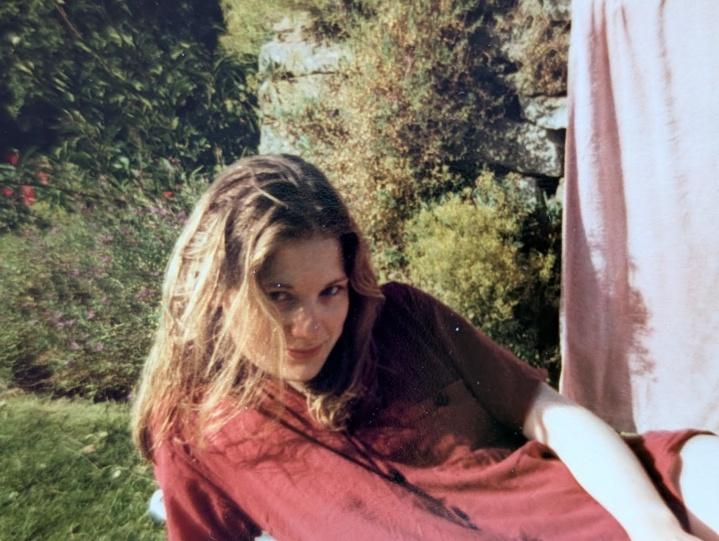
Remarkably, they have all kept in contact for over 40 years since they met, and all came to take Nicky out for a fine and much-appreciated lunch after she had her first round of chemotherapy, on 10 June last year.
She met Rex on ward 5F (general surgery, Gough/Kettlewell firm) in late 1982, where she was a final year student nurse and Rex was House Surgeon, as they taught each other how to insert ever-larger Venflons — the cannulas used for IV drips — into each other’s veins. It is not clear whether the rather well-behaved PJ Gang approved…
Although the PJ Gang are not all able to come today, they have all been invited here and have sent some moving messages. Several of Nicky and Rex’s friends who knew them both, in 9 Stephen Road, have been invited too.
After Rex and Nicky did weekend commuting for a year or so between home in Headington, Oxford and Rex’s work, the prospect of three years in Cornwall came up. With jobs 250 miles apart, the big question came up: would they both move there?
It looked very likely: they house-hunted with Rex’s parents while borrowing Nicky’s parents’ VW camper van.
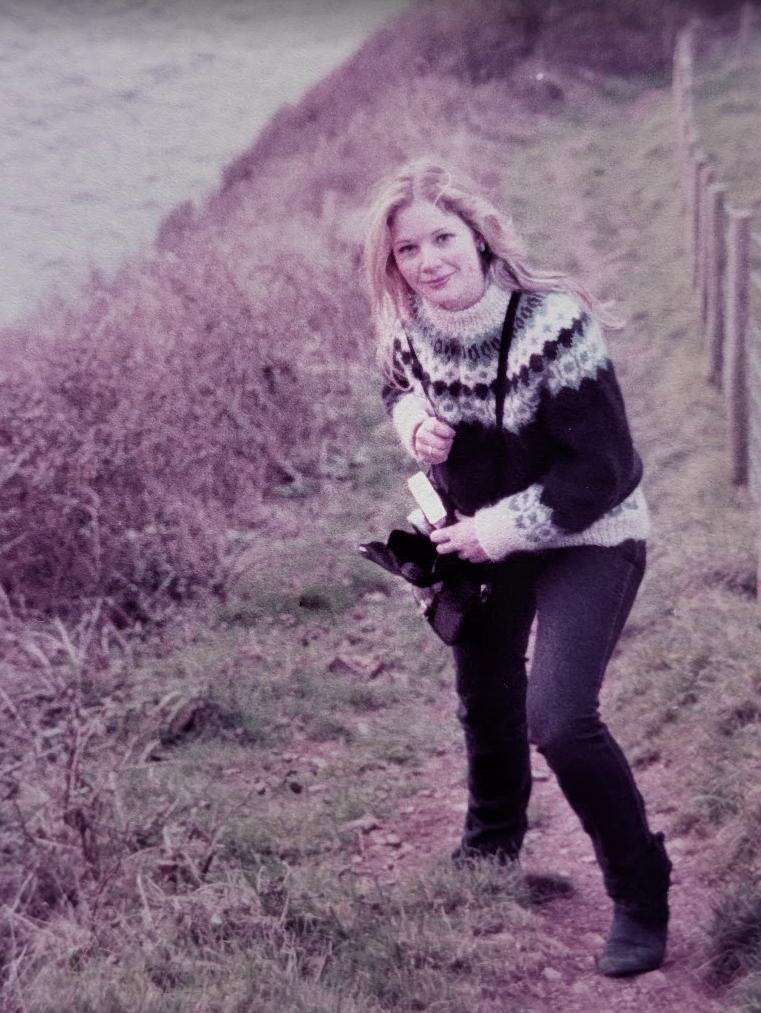
They moved together into Church Cottage in Probus, as their new home together — and frequent party venue. As ‘living together’ was still somewhat frowned upon in those days — more by Rex’s parents than by Nicky’s — the pretence of a ‘shared house’ was maintained until they were married, on the same day as he-who-must-not-be-named Andrew and Fergie, on 12 July 1986. It would have been their 40th wedding anniversary the day after this memorial event.
Nicky fondly remembered their three years in Cornwall as a carefree, fun-filled time with many friends, doctors’ mess outings, and the frequent parties at Church Cottage.
Several close friends from those days have been invited today.
Life became more serious as they returned to Oxford to train for specialist careers — Nicky in anaesthetic nursing and Rex in medical psychotherapy.
But it was also the time to start the family, which happened when they lived at 18 Acre End Street in Eynsham. Ben and Bethany were both born at the hospital where Nicky and Rex met, the John Radcliffe: Ben on 4 August 1989 and Beth on 28 January 1991.
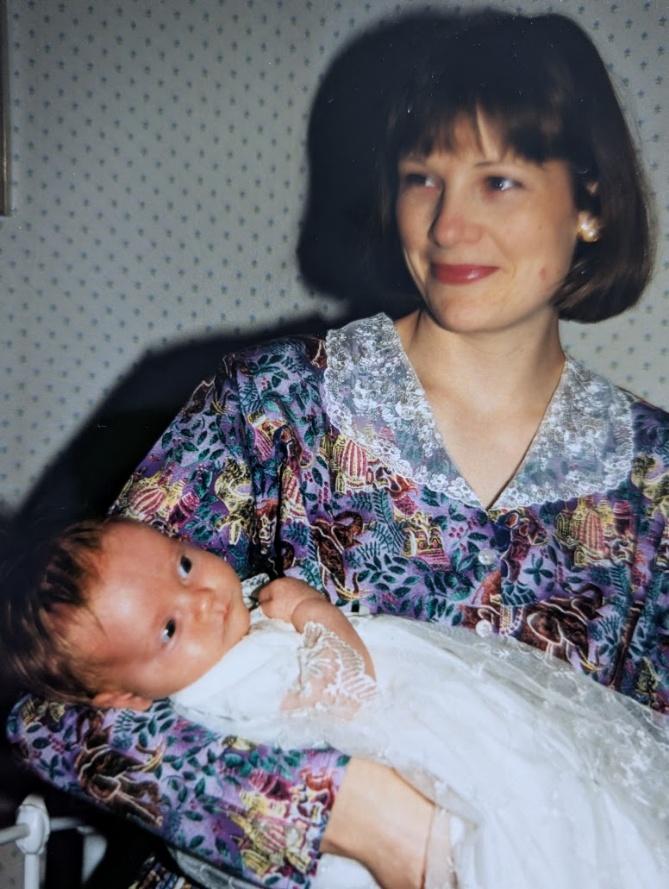
We set up home in Bromsgrove, which gave Nicky the opportunity to take a career break, with her hands full with child, toddler and baby Tim, born in Worcestershire on 13 June 1993. Rex made the excuse that he couldn’t help all that much, as he had to be in London twice each week. However, they did find time to decorate the house from top to bottom and do a complete garden makeover together.
There were some beautiful places there that Nicky loved, such as the Lickey Hills, Hanbury woods, and the Malvern Hills. When we took infant Bethany for a cold winter walk along the Malvern Hills, on Rex’s shoulders, was the day she turned blue. Thankfully, she turned pink again when we got back into the warm car!
The same day Rex’s father died, 10 April 1994, the ‘job for life’ was advertised in the British Medical Journal. It would allow Nicky to return to the team and department she loved, back in Oxford. The ‘moving every three years’ hassle was over.
We have invited friends from Eynsham and Bromsgrove who Nicky was in contact with when she died.
When Rex was appointed to his Berkshire consultant post, Nicky planned the house-hunting for the big move back to the Thames Valley. The Highbury house in St Mary’s seemed perfect for raising a family — and Nicky moved heaven and earth to make sure we were able to buy it.
We moved in with just-started-school Ben, toddler Beth and baby Tim on 25 July 1994. For the first few months, Rex commuted daily to Birmingham and twice weekly to London to finish his training. He started his consultant post in one of the last ‘lunatic asylums’ in the countryside — Fair Mile Hospital near Wallingford. Coincidentally this was on 1 November 1994, which would have been his father’s 69th birthday.
With a large and rather run-down house to renovate, they took the long view, and did it slowly. Dominic was a Hampshire baby, born on 21 May 1996, and Nicky’s hands were full until she reconnected with her old team in Oxford, and fitted in a spell of practice nursing at the Mortimer Surgery.
The routine for many years was for Rex to work Monday to Friday, and Nicky to do two or three long days up in Oxford over the weekend. Rex’s mother, ‘Grandma Gabby’, filled in many of the gaps, with her weekly travel from Midhurst to Mortimer to help look after her grandchildren. She died at 93, on 29 January 2022.
Nicky’s mother, ‘Grandma Lellie’ to the children, died at 77, a few days before Nicky’s 50th birthday, on 2nd March 2012. Nicky’s father died at 96, on 4th November 2023.
Life at Highbury was always pretty hectic, and our routines centred around Mortimer: the schools, the ever-changing two supermarkets, ‘Dad’s Shop’, the Fairground, Rex bellringing at the two churches and cycling to the station (to escape off to work), and neighbours and friends. Beth and Emma were particularly delighted when the Butler family moved into the house opposite!
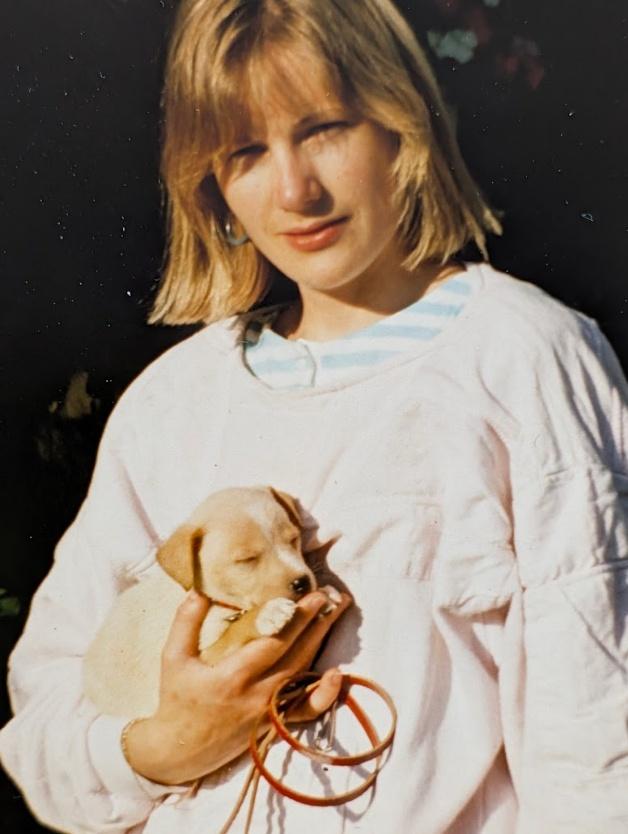
Pets were a big part of life — the cats Luther and BJ arrived soon after the wedding, followed a year later by rescue dog Winnie. After managing the increasing responsibilities of two cats and a dog, it was time to start having children, which followed 1, 3, 5 and 8 years later. After Winnie died, Milly joined the family — another rescue dog. For Rex’s 50th, in 2007, Dylan the very eccentric dalmatian was an unexpected but much-loved gift. He had serious metabolic problems and died aged eight. Life in a home without a dalmatian was a bit dull, so Buffy arrived in 2018.
Nicky’s annual traditions were very important: birthdays, which had a special routine we always kept to; family holidays, with a ‘special’ one every three or four years and extra special individual ones for the Millennium; decorating one room each year with her adventurous colour schemes, including the stained glass window she made for the hall; and — of course — Christmas, for which Nicky always worked so hard and tirelessly to make as magical as possible. Rex’s contribution was to collect a car load of holly to put everywhere in the house.
Other special memories include collecting the turkey from Burghfield on a sledge the year we were snowed in, and the annual agony of choosing exactly the right Christmas tree, often with horticultural friends Michele and Yvette. They remember how, even in the pouring rain, the tree had to have enough branches for her expanding collection of baubles, have just the right shape and not be at all wonky or crooked.
One such expedition was interrupted on the M4, with a large but insecurely attached tree travelling at 70 miles per hour on the roof of the car. At the same time as Yvette saw something green and bushy in the corner of her eye, a police car appeared. A little of Nicky’s innocent explanation and charm saw them all on their way with a better-secured tree and no further trouble.
Cooking and Nicky’s special meals were also part of the rituals — and we have printed out some of the special recipes for you to try out.
There were a few things that Nicky strongly disapproved of, but Rex got away with, at least once! One was taking Dominic down the hill to St Mary’s School on the back of his Brompton bike, and two others both involve fire.
The annual ritual of burning the Christmas tree and all the holly outside the front door went up with a tremendous whoosh — but after two or three years it was firmly banned, and prevented from happening by Nicky putting all the holly on the fire in the living room well before Twelfth Night, and cutting branches off the Christmas tree and burning them too.
When Tim was in the sixth form, he and Rex learned the art and skill of fire-breathing, and Tim got very good at it. The school was less impressed when he hid in the school grounds and showed his new party trick to some friends — and told everybody that his dad had taught him how to do it.
As years went by, the four children moved on and left home; the first was Ben, to UCLA. Los Angeles has now been his home for 14 years, and although Nicky was tremendously proud of his career and success there, she was never really happy that he was so far away. However, it also opened up the opportunity for some magical trips to the West Coast which we all appreciated.
With all the children going through the local schools, we made many lifelong friends over the Mortimer years, and many of them will be here with us today.
Nicky started as a student nurse at Oxford School of Nursing in October 1980. She was then a staff nurse on a gynaecology ward at the Churchill, before moving to Royal Cornwall Hospital Treliske in March 1984, on a haematology and oncology ward.
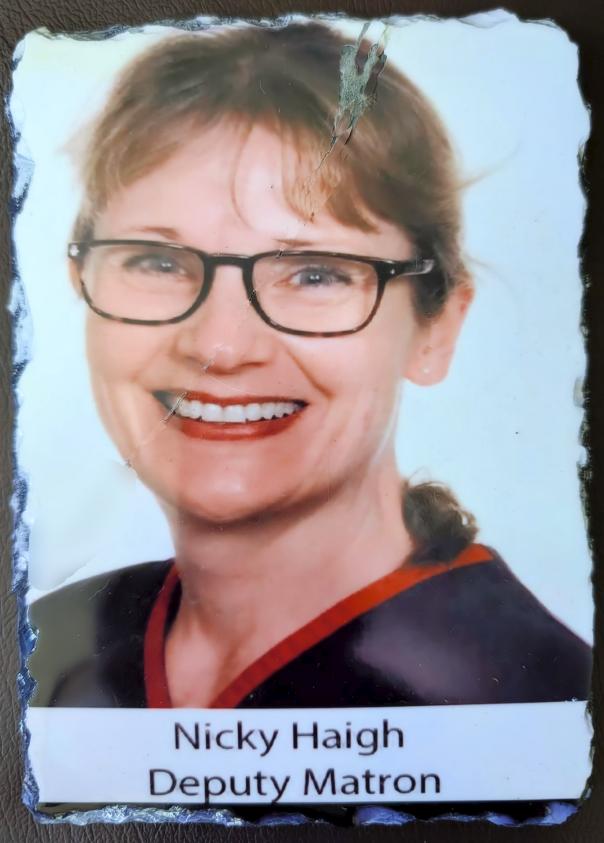
She used to tell moving tales of how the consultant there dealt with patients’ impending death in such sensitive and respectful ways. On her return to Oxford in 1987 she worked at the Radcliffe Infirmary and found the specialty that she would love for the main part of her career: high dependency, anaesthetics, recovery, and theatres.
After her career break when the children were small, between 1990 and 1994, she worked in various part-time and temporary roles, including as a practice nurse in the Mortimer GP surgery.
In 1999, she ‘came home’ to her mother ship, the John Radcliffe, in anaesthetics and recovery. As Nicky’s career progressed, and the children became more independent, she climbed the NHS career ladder, gaining the experience and qualifications needed for senior, and later management, posts.
Nicky’s mother died a few days before Nicky was 50, on 2 March 2012. Although her mother was very proud of her daughter’s nursing career, she never knew how much she achieved: becoming Anaesthetics Sister in 2014, then acting Deputy Theatre Matron and ultimately the substantive Deputy Matron for the JR2 emergency theatres in 2016.
Nicky was very committed to staff welfare, and Rex remembers the efforts she went to at home to give all the staff small Christmas presents. She would also make Christmas stockings for all those on night duty on December 24th.
She was focused on constantly improving the lives of patients and colleagues around her, and always led by example, going the extra mile no matter the ask — even deploying her well-practised decorating skills when called upon. Her professional aspiration was to be of service by bringing benefit to the working environment, and using relationships to engage the people around her to give their best, and enjoy their work. She succeeded in doing this at as high a level as these things are possible.
In her last couple of years in the post, she was deeply involved in coping with Covid, and collaborated with Rex and a group therapy colleague, Dennis, to set up a support and sensitivity group for staff who were being traumatised by the experience.
Having climbed as high and become as senior as she ever wanted, she retired in 2022 to focus on other things to enjoy after her long and successful career: grandmotherhood, gardening, crafts, walking, travel and — of course — the family. As well as planning and building an eco-home.
We have invited as many colleagues and staff as we could find on her mobile phone, and asked them to pass the invitation on to any others who knew her well. We welcome them all.
Like her mother, and probably most mothers since time immemorial, Nicky was always very keen to encourage the next generation to procreate, and she was obviously overjoyed when her first grandchild was on its way. It all came to life, literally, when granddaughter Olive was born on 4 June 2020 — a true covid baby, born a few weeks early at the Royal Berkshire Hospital in Reading.
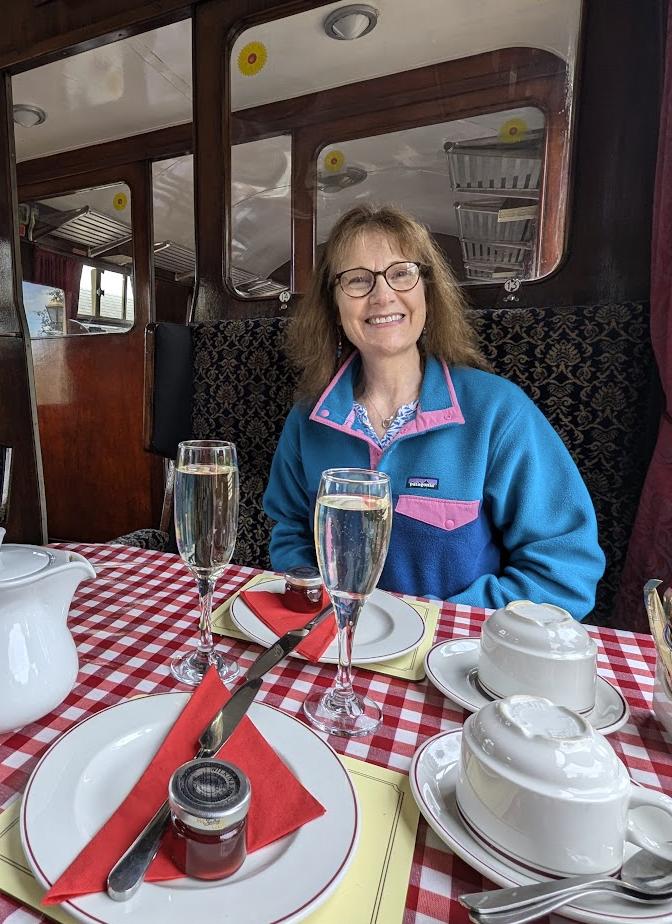
After working while Beth was on maternity leave, Nicky was ready to leave the utterly exhausting work of the post-covid NHS, and as a very proud grandmother, was very happy indeed to be a full-time granny.
Nicky and Rex both retired from the NHS in February 2022, and they started to make grand plans — as in ‘Grand Designs’ — for twenty years, or maybe more, of making and then living in a beautiful, contemporary eco-house.
They sold the beloved family home to a young couple, one of whom, Sophie, was a close childhood friend of Ben. In May 2024 Nicky and Rex moved out of Highbury and into a rented home: Wyndham House on Wakeford Farm in Pamber End. It was a good interim house for them, though very different from village life in the centre of Mortimer. And it was in Hampshire — which was on the other side of a major boundary for health, schools, planning, bell-ringing and bus passes.
But it was good to be part of a small community of supportive and friendly neighbours, overseen by Mrs Knight, the elderly matriarch of the farm. Nicky and Rex were allowed to call her Virginia, although to others living on the farm she was ‘Mrs Knight’ or ‘Ma’am’. Next door neighbours Linette and Elliott were particularly helpful and supportive when the cancer diagnosis was made.
During this time, Nicky and Rex regularly attended seminars and trade shows at the National Self-Build and Renovation Centre (NSBRC) in Swindon. It is a vast hangar just off junction 16 of the M4 which houses a permanent exhibition of how to build a house. It also holds free Saturday seminars and various other events, with trade stands and experts in various aspects of construction who give free half-hour consultations. We met experts at the cutting edge of new construction technologies, heard about things we had never heard of before, and learned a whole new language. It was excellent preparation for our retirement plan.
Helped by our friendly local architect, Peter, we first had a few unsuccessful attempts to buy a suitable building plot in Mortimer, but then found and bought Impstone Lodge in Silchester. It was — and still is — a small but very run-down 2-bedroom cottage with an acre of woodland to the side. The intention was to demolish the uninhabitable cottage and build a replacement dwelling on the plot.
Nicky was determined that the planned new house would, in its own small way, leave the planet in a little bit better shape than it was before we built it. Many energetic, inspiring and exciting meetings with Peter followed.
It would have all the sustainability features that we could afford, most of which we had learned about over two years of attending events at the NSBRC: ‘fabric first’ construction, timber framed and built to a standard of insulation, airtightness and energy control close to Passive House requirements; PV panels and a battery with feed-in system; heat recovery and heat pump ventilation (HRV/HPV) for heating in winter, cooling in summer, and hot water; underfloor heating throughout; triple glazing for heat retention; solar shading and specialist glass to prevent excess solar gain; rainwater harvesting; low impact and sustainable materials as far as possible (to do this fully requires very deep pockets!); and architectural features to make it beautiful and practical.
The previous owners of Impstone Lodge were a family who had been there for sixty years, and had made a magical garden with imps, statues, arbours, cobbled paths, secret spaces, hidden rustic seats, psychedelic art and hangings, goblins, cherubs, stone cairns, eastern deities, wind chimes, willow domes and much else besides. Unfortunately, it was all overgrown beyond redemption — and much of the garden stood on the site where the new house was planned.
There was also one old oak tree which sadly had to be sacrificed for the new build. We arranged for contractors to remove the tree and clear most of the hippy garden away, which Nicky supervised while Rex was in Canada. It happened early on a Saturday morning, 12 October 2024. This was to avoid anybody stopping us by contacting the tree preservation department, which was shut until Monday morning. In fact, meeting the neighbours since, we learned that they had done much the same themselves, and did not mind at all. We then worked with Peter and his team of architects to apply for full planning permission — and wait.
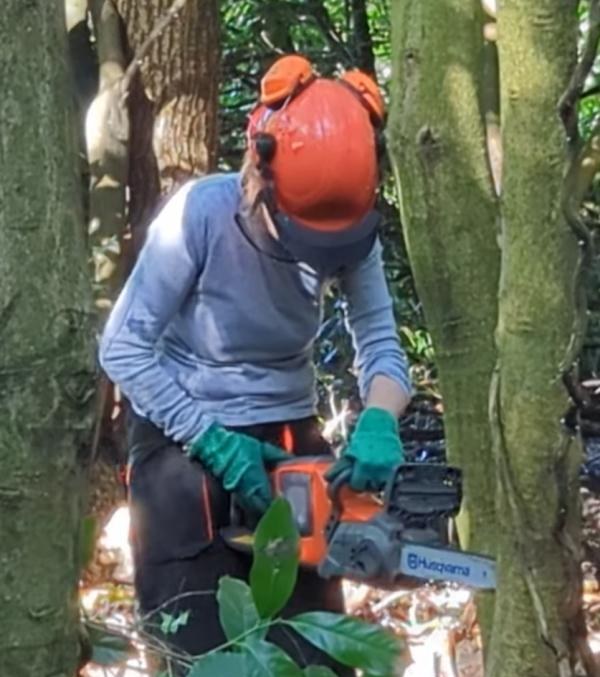
Meanwhile, somewhat intimidated by the scale of the task, Nicky was much helped by Dom and Tom — and a little helped by Rex — to tackle the deep dark wood next door. Almost no light reached the ground, and it was overcrowded with overgrown and unhealthy laurels, tall lanky holly trees and a mass of invasive rhododendron, which had cloned itself across much of the wood.
Nicky and Dominic were determined to turn it into a thriving biodiverse space with a four-stage rejuvenation plan over about five years. It included introducing a wide range of native vegetation, and encouraging wildlife with dead hedges, bat boxes, insect habitats and natural means to develop a thriving and diverse ecosystem. As a graduate in Wildlife Ecology and Conservation Science, Dom was perfectly qualified to oversee and guide the project. An important aim, ultimately, was to see the Ancient Woodland Indicators — bluebells, wood anemone and wild garlic, as well as dog’s mercury, wood sorrel, yellow archangel and herb paris.
Nicky’s longer-term dream for the wood also included the grandchildren, present and future: rope swings, ladders, platforms, wigwams, tree houses and many rural adventures for them and their friends.
We have invited our friends and neighbours, those we got to know in Pamber End.
Pancreatic ductal adenocarcinoma
Part of the preparation of the site for the new house involved cutting down very overgrown holly, laurel and rhododendrons — and Nicky taught herself to be very good with a chainsaw, doing an enormous amount of work with Dom and Tom, and Rex sometimes, through the autumn of 2024.
After forcing a particularly stubborn holly tree to fall, Nicky had back pain and thought she had injured a rib or hurt her back. Many painkillers and a few GP-led investigations followed — with an MRI in early 2025 showing no spinal cause, and a gastroscopy showing no gastritis. We thought gastritis or a stomach ulcer was quite likely with Nicky’s heavy use of NSAID painkillers. With those two diagnoses ruled out, more sinister reasons for the symptoms had to be thought about.
The pain symptoms worsened, and an emergency visit to North Hants Hospital in early February led to a week’s admission for investigations and rather unsuccessful pain control. The ultrasound finding of ‘a shadow in the pancreas area’ on 21 February 2025 was a harbinger of the inevitable — which we both immediately realised. Hopes of curative surgical treatment were extinguished with the formal ‘stage 4 PDAC’ diagnosis being given on 28 February, Rex’s 68th birthday. The tumour was entangled with the superior vena cava and mesenteric artery, which made it inoperable and stage 4.
The pain further intensified, and was often unbearable, until Nicky was admitted to St Michael’s Hospice for a week at the end of March. The family all thought that the end was imminent — a feeling and fear which was to recur several times over the following months. However, a subcutaneous oxycodone regime was successful in controlling the pain, on which Nicky went home. Soon after that she was weaned off the syringe driver and onto oral medication. She then had several pain-free months, despite some problematic side-effects from both her analgesic regime and the chemotherapy.
The same week as the diagnosis, there were two other very unwelcome communications. The first, from Basingstoke and Deane Council’s Planning Department, stated that the eco-new-build would not be allowed, on heritage grounds: knocking the derelict old house down was forbidden. The second was from the council’s Tree Department — a formally sealed certificate and official letter from the tree officer explaining that the work Nicky had been doing to improve the woodland had been reported to them and was not permitted: the whole wooded area was therefore placed under a tree preservation order.
Although these two communications from the council were minor when compared to the diagnosis, they made it immediately obvious that we had to cancel the new-build and make a different plan. In May, Nicky and Rex did go to the council hearing to personally contest the TPO, but the councillors voted 7–0 to let it stand. “It was inevitable and anything else would set an unacceptable precedent,” as the sympathetic and personable tree officer told us afterwards.
So the family came together and decided to buy a house we could all live in together, and have as much three-generation family time together as possible. We would use the capital from the sale of Highbury to accomplish our sustainability and low-impact aims in a different way: in a 200-year-old cottage rather than in the new-build. With much help from our architects and the builders in Dan’s family, the major renovation started in October. Nicky oversaw it with her characteristic energy, determination and style — and thoroughly enjoyed seeing most of her plans come into being.
The result is the house and garden you stand in. There is a separate section on our ‘deep retrofit’, and all the eco-features, if you are interested.
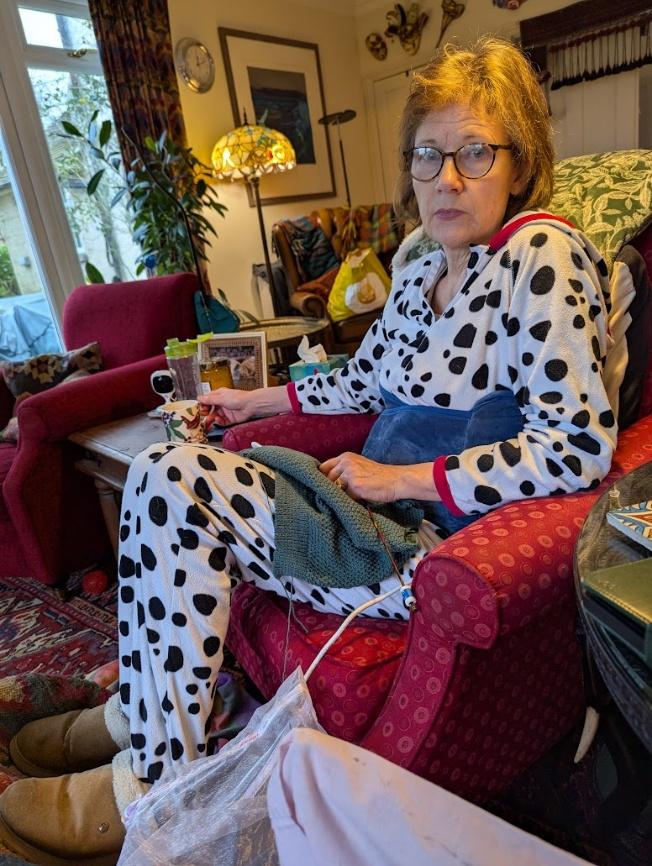
When we were initially given the diagnosis, we were told “3 to 6 months without treatment; 6 to 9 months with treatment — but those are only averages”. Three spring and summer months of aggressive FOLFIRINOX chemotherapy caused a good reduction in the tumour size, and we held out high hopes for the innovative Stereotactic Ablative Body Radiotherapy (SABR) in Oxford in September. Unfortunately, it had no impact whatsoever on the tumour, and Nicky only managed to have one cycle of GEMCAP chemotherapy before she became too poorly to tolerate any more. We met the oncologist the week before Christmas, and he delivered the message we knew was coming but dreaded to hear: “there is no more active treatment we can do”.
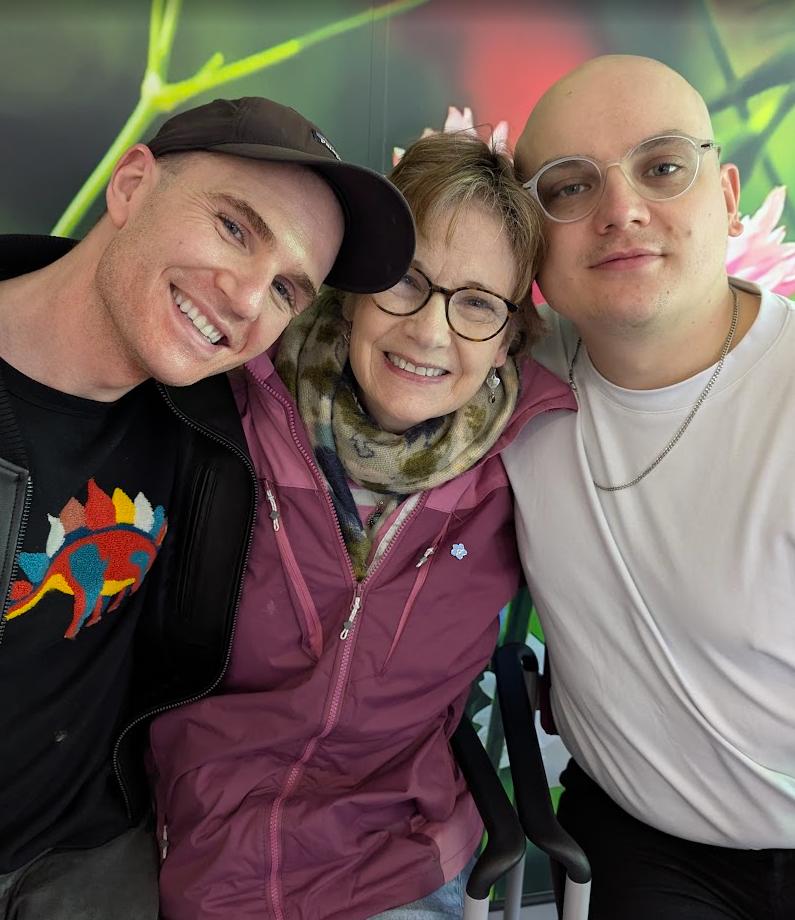
With all hopes now clearly dashed, we re-established Nicky’s palliative care with the unsurpassable team at St Michael’s Hospice. We had a very sad last Christmas and New Year together, with all our usual rituals and many good moments of fun and joy.
The awful disease process continued, and metastases were found in Nicky’s liver, lungs and spine. In February, the liver damage caused ascites, severe leg oedema, and increasing jaundice. The hospice team arranged a blood transfusion and a paracentesis, which helped her symptoms and energy level a great deal — but palliative radiotherapy for spinal pain was ruled out because the SABR had caused too much tissue disruption in the same area as the bony metastases.
A CT scan, to see whether a biliary stent might improve the jaundice, was done on the Sunday before Nicky died. We never heard the result, although the oncologist had forewarned us that a stent was unlikely to be possible because of the widespread liver damage. Nicky and Rex went for tea at the local farm shop afterwards, for the last time.
On the Monday before Nicky died, longstanding family friend Fiona took her to M&S in a wheelchair, so she could buy some new clothes for Rex’s birthday the next Sunday, ‘so he could smarten himself up’. They didn’t manage to go to the farm shop for tea after that outing, though they had intended to.
On Tuesday, Rex was sitting in the bedroom with Nicky while she was drifting in and out of consciousness, when builder Mark shouted up to us: ‘sorry to bother you, but do you know what size shower tray you ordered?’ Rex wasn’t sure, but quick as a flash Nicky shouted back ‘800 by 800’. Those were her last words.
We had already contacted Ben to ask him to arrange to fly home from LA on the next possible flight; in the event we called him again to get an even earlier one. He landed at Heathrow at midday on Thursday 5 March. We were all with Nicky when she took her last breath and died at 9pm.
Undertakers took her away the next day, and we arranged a direct cremation with nobody attending. We did not want a crematorium service, and the Bramley rector at St James Church, Mark Anderson, arranged for us to have a very small family service to say goodbye to Nicky the following Friday. It was a beautiful service in a beautiful church.
On Friday 10 April, Rex and Beth went to collect the ashes from Basingstoke crematorium. It was exactly 34 years after Rex’s father died. The staff were extremely kind and sensitive, and explained how direct cremations are undertaken with all possible care and dignity, usually early in the morning. It was curiously reassuring. The crematorium is in a beautiful setting, with bluebell woods adjacent: we took Nicky’s ashes for a short walk there, feeling her presence and being sure she would have approved.
We have divided the ashes between Rex and the four children, for each to plant under a new tree or shrub. One of her favourite trees is planted behind the bench next to the pond — her atoms will always be there, with us.
Since she died, we have been thinking of Nicky all the time — and making sure that her project for the family home and biodiversity garden is done just as she would have wanted, in time for today.
We have invited the hospice staff and Rev Mark Anderson here today.
Nicky and Rex didn’t have a garden in Cornwall, so their first was in Eynsham — where our end-terrace house had a small walled garden, and where Nicky started her passion to grow interesting and beautiful things.
The bug for gardening had taken hold, and at our next home, in Bromsgrove, the garden was given a complete makeover: rotavated, divided into different areas, brick paviour paths, trellises, wide beds and — Rex’s favourite part of it — serious compost bins.
With thirty years at Highbury in Mortimer, although the garden was modest in size, it continually evolved as Nicky honed her horticultural knowledge and skills. She developed a particular affection for different plants over the years, including wisteria, hostas, alliums, ferns, cacti, strelitzia, clematis, box, grasses, bamboo and ceanothus, and probably many others. When Nicky went pruning, Rex usually thought she had cut far too much down — but they always grew back better. She particularly liked intricate flowers and unusual plants, but very rarely were they allowed to be yellow or orange!
In the early 2000s, she started ‘Containermania’, a small hobby business with her gardening friends Michele and Yvette — going to various shows and events to sell elegantly presented plants in pots.
Michele and Yvette have many fond memories of those years, including many serious shopping trips to garden centres and early Sunday morning journeys to Columbia Market in London’s East End. Columbia Market was always full of smells — coffee, bagels, plants and flowers — often had film crews there, and dense crowds of people from far and wide. Persuaded, encouraged and motivated by Nicky’s formidable energy, the Containermania threesome would buy large and heavy ceramic pots and carry them through the crowds, never to be beaten or deterred from their mission!
The prospect of a whole new garden at Impstone lit a fire in Nicky’s belly, and she started collecting plants like a woman possessed! Although her diagnosis changed nearly everything for us all, it didn’t dim her passion for making a beautiful garden. Aided by Dom and Tom, they started scouring garden centres far and wide — and never came home empty handed. When they came to visit for a weekend, visiting only one garden centre or nursery was a bit of a disappointment; four was a real treat.
When we were in the rented farmhouse, the collection of pots at the front of the house grew and grew, and took over much of the parking area. The eucalyptus tree needed to be strapped to a drainpipe there, to keep it from falling over. The tree ferns were a particularly epic adventure: sourced in Bristol, it involved carefully wrapping them up, hiring a fairly large van, and setting up an irrigation system to keep them happy during the hot dry 2024 summer.
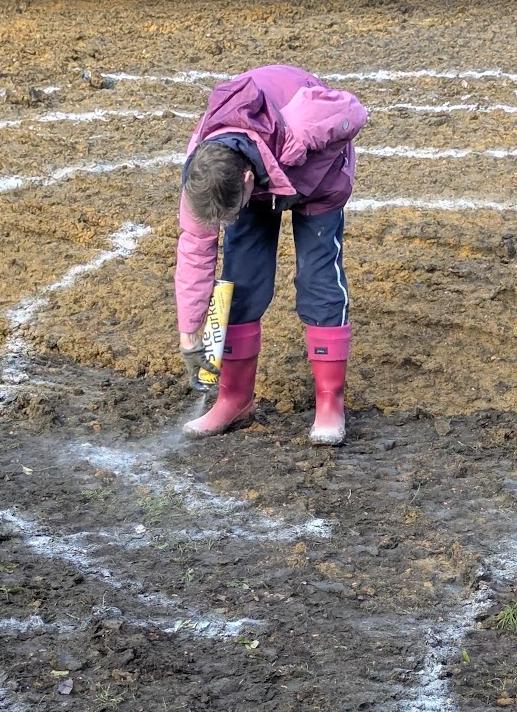
Last November, when the renovation work was being done, Nicky spray-painted the shape of the pond onto the bare earth. When Nick the diggerman next came, she was out there showing him exactly where the mounds and contours had to go. With a great deal of hard work by Dom and Tom, plus delivery of several tons of pebbles, topsoil, wood chippings, bark, soil improver and hoggin, the biodiversity garden took shape.
As well as the garden centre excursions, Nicky used many of the best online nurseries — and specimens for the pond arrived until the week before she died. She sat on the patio unpacking them and sorting them out, and gave Rex instructions not to let them dry out.
As this year’s very wet January was followed by a hot dry spring, detailed drawings of the different areas were drawn up. There would be different zones for the beach, grasses, a cottage garden, mediterranean plants and herbs, New Zealand plants, and a rainforest with waterfall. Over the record-breakingly hot half-term, the plants were all gathered together into their right places, and we had ‘the great planting day’ on Bank Holiday Monday.
Michele and Yvette, who were so important in Nicky’s horticultural adventures, helped Dom and Tom to get more than 200 plants out of their pots and into the ground. They had invaluable knowledge of what Nicky liked, as well as understanding what the different plants need.
The garden you are standing in is hers. ✿
Apart from gardening, the hobby that took most of Nicky’s time was making things: creating clothes, ornaments or — usually — gifts for other people. She always had several projects on the go, with deadlines which often kept her up till early in the morning, and never more so than as the nights drew in and Christmas approached!
It was remarkable how she could watch and understand complicated crime dramas on TV while barely lifting her head from the current work in progress. Rex, following the TV carefully without any such distraction, was often left bewildered by the plot twists and left behind. He often could not even ask her for help, because rows were being counted or patterns analysed.
One particularly special project, which started when Highbury was sold and retirement was planned, was the house’s miniature version, complete with conservatory and electric lights. Over a couple of years, Nicky collected tiny furniture, ornaments and fittings that would conjure up that feel of ‘Highburyness’. Sadly, her illness stopped her before much of it could be completed — but friends have plans to bring it back to life.
In this house, we are going to set up her craft room much as she was intending, so hopefully the grandchildren, or anybody else who wants to try, can spend a few happy hours immersed in creativity, making and inventiveness. As she did.
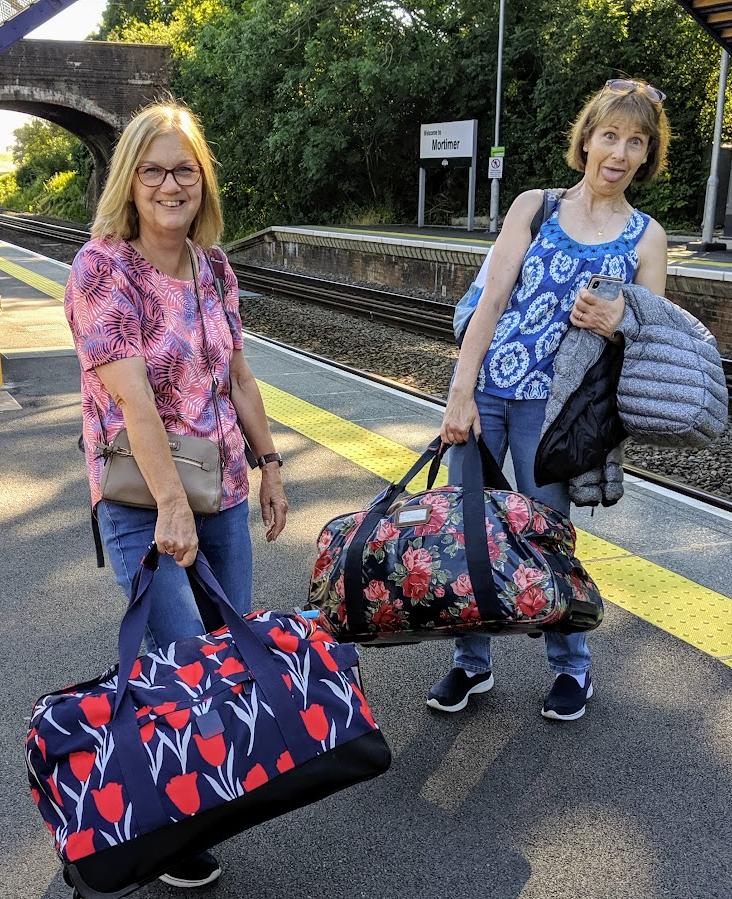
Another hobby she very much enjoyed was serious walking — in walking boots polished to a mirror-finish by son-in-law Dan. Probably inherited from her mother by nature or nurture, every year or so she would undertake a new ‘big walk’, taking several days or more, with her friend Michele. Some of her favourites were the West Coast Path, Hadrian’s Wall and the West Highland Way, but there were many others too. They sometimes involved long detours to avoid cows — although on occasions Michele would have to shoo them away, only for them to reappear in the next field.
She made detailed diaries and photo albums of the walks, and kept everything in order with her way of writing lists, and the G&T at the hotels at the end of each day’s walk.
And when she was back at home, the ‘other children’ — Winnie, Milly, Dylan and Buffy, the family dogs over the years — would enjoy regular long and energetic walks that few others would, or could, provide!
Michele remembers how Nicky was always completely and fully involved, with everything under control, presumably coming from managing the frequent chaos and hurly-burly of having four children at home. Michele also reflects that we must not let the injustice of the cancer spoil all the good things.
Her interest and excitement about travel were both encouraged and somewhat restrained by the experiences of her own childhood holidays. As her father had long summer holidays away from Sevenoaks School, they made some epic journeys over several weeks in the family’s VW camper van. A particular one she remembered was to Isfahan in Persia, with fascinating details and stories to tell about it, which she fondly recalled until her last few days. The downside which perhaps moderated her enthusiasm was how she and her siblings would be left outside bars and pubs, with warm chlorinated water to drink, while mum and dad were inside whooping it up and sampling the local beverages.
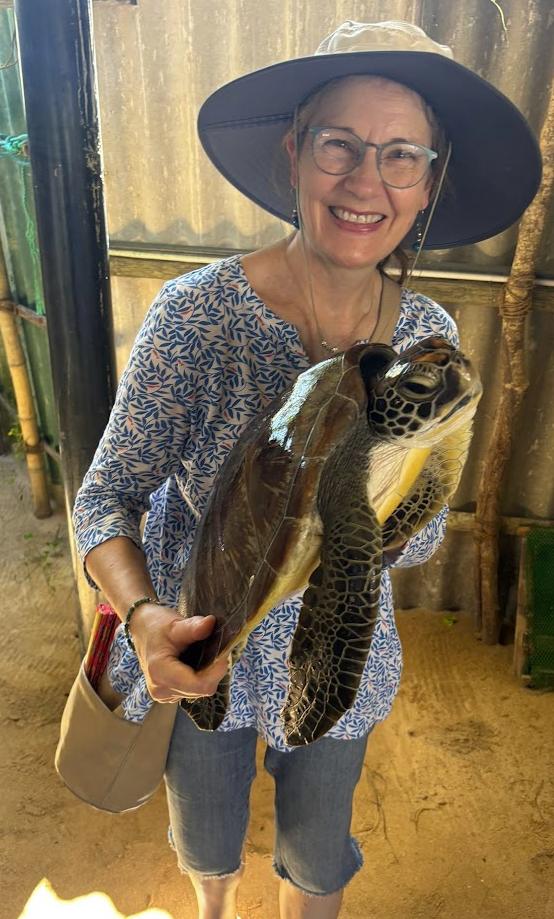
When Ben, Beth, Tim and Dom were children, there were special family holidays every three or four years. Particularly memorable ones included Thailand in 2007, the South West USA in 2010 (just after Ben graduated from UCLA), Italy in 2013, and British Columbia and the Rockies in 2017 for Dom’s 21st. Each of the four of them also did a solo trip with each parent in millennium year — ask them about it!
In 2009, Nicky made the heart-wrenching trip with Ben to leave him at UCLA, 5,500 miles away. The family plan to have a ‘30th birthday special’ — a holiday abroad with each couple and partner — started with Ben and Shea in Cape Cod in 2019, and then became disrupted by the coronavirus. Beth and Dan’s became an extended family house party on the coast in Devon, just after their post-covid wedding in 2022. It is so sad that Nicky will not make it for Tim and Charlotte’s special, provisionally Rome later this year, or Tom and Dom’s — maybe the Norwegian fjords, or Iceland, when we have time and energy to organise it.
Nicky very much loved the idea of New Zealand, and it was planned to be a spectacular post-retirement holiday, going round the world to do it — but busy life, then the horrible illness with her increasing weakness and physical decline, jinxed it. Nicky and Rex were also hoping that one Christmas it would be possible for them to enjoy some tropical sunshine with Shea’s family in Hawai‘i. Another one that, sadly, will never happen.
After abandoning the newbuild at Impstone, nearly all the sustainability and low-impact features that Nicky wanted have been incorporated here, in Rosemary Cottage.
The exceptions are the ‘fabric first’ approach — to prevent nearly all heat loss and solar gain — and installing HRV/HPV heat pump ventilation, which would have taken energy out of our warm dirty air and replaced it with warm clean air in winter and cold clean air in summer. However, Rosemary Cottage has as much heat pump and renewable sustainable technology as is possible for a 200-year-old building.
This is to the left of the conservatory, at the end of the passageway and shed. It provides up to 15kW of heat, but with the magic of extracting heat from cold air by making it colder, it only ever draws a quarter or a third of that energy from the mains. An old house of substantial ‘thermal mass’ helps to keep an even temperature all the time, and almost never needs adjusting. Apart from the conservatory, the thermal mass also keeps the inside fairly cool in hot weather.
One of the interesting things commissioned before fitting the ASHP was an air-test: with all the windows shut, they put a huge suction fan over the front door and pull a lot of air out of the house. You then go round feeling for draughts, which can be in the oddest places, with the intention of blocking as many of them as possible. It also measures the house’s airtightness, and ours was 10 ACH — air changes per hour — which isn’t too bad for a higgledy-piggledy old cottage.
As well as the main pump for all the house heating and hot water, there are others. Direct heating by electricity is stupidly expensive, and we now have no gas or oil, so:
Obviously not visible, but the manifolds for the two sets of pipes are under the back stairs, and in the corner of the craft room. A complete nightmare to fit; we have many tales to tell. Ask us about it at your peril!
Six panels on the garage and seven on the road side of the house. The battery and control system are at the end of the passageway to the right of the front door, where the oil-fired boiler used to be. On a good day it provides 30kWh, and can charge the car, run the house without the grid, or be fed into the grid — which pays us, a bit.
Despite architect Peter telling us that it nearly always drops off people’s lists of eco features! The 7,500 litre tank was a monster to install, is about the size of a flattened car, and is buried next to the fence behind the shed near the cars — though cars should never be allowed to go over it. It collects from both sides of the garage roof and feeds the loos in the garage, the washing machine and the garden tap. The control panel is under the stairs in the utility room.
Nicky always loved having people to stay, especially the family, and even better all at once. Hence a spare bedroom upstairs and a sofa bed in Rex’s room downstairs. Rex was keener to have a space to occasionally escape from the less appealing aspects of multi-generational living. Also, a double garage would always be wasted on us, as we only had one car and have never kept it in a garage.
After surviving with a very small kitchen in the rented farmhouse, it was a delight for Nicky to set up a kitchen that was meant to last us forever. The design started last June, and Nicky was understandably very keen to have it finished for Christmas. Despite the long lead time, with all the other building work going on — particularly the underfloor heating — there were times when we thought it would not be possible. But the kitchen suppliers understood our situation, and put every effort into making it happen. It was finished the week before Christmas.
This was more on Rex’s wish list than Nicky’s, but having dodgy wifi and internet gets more and more annoying the more we come to rely on it. So we now have three hubs: a new BT box near the front door, one above the utility room (hardwired with an armoured cable under the flowerbed), and a third in the summerhouse, connected by a beam between the two white aerials at the corner of the house and the summer house. The wifi in the house is a Google Mesh system, as recommended by Ben, although the thick walls are still a problem sometimes.
Bramley Corner has been promised full-fibre broadband — it is already along the road into Bramley and in the Openreach cabinet by the postbox — but with no promise of when.